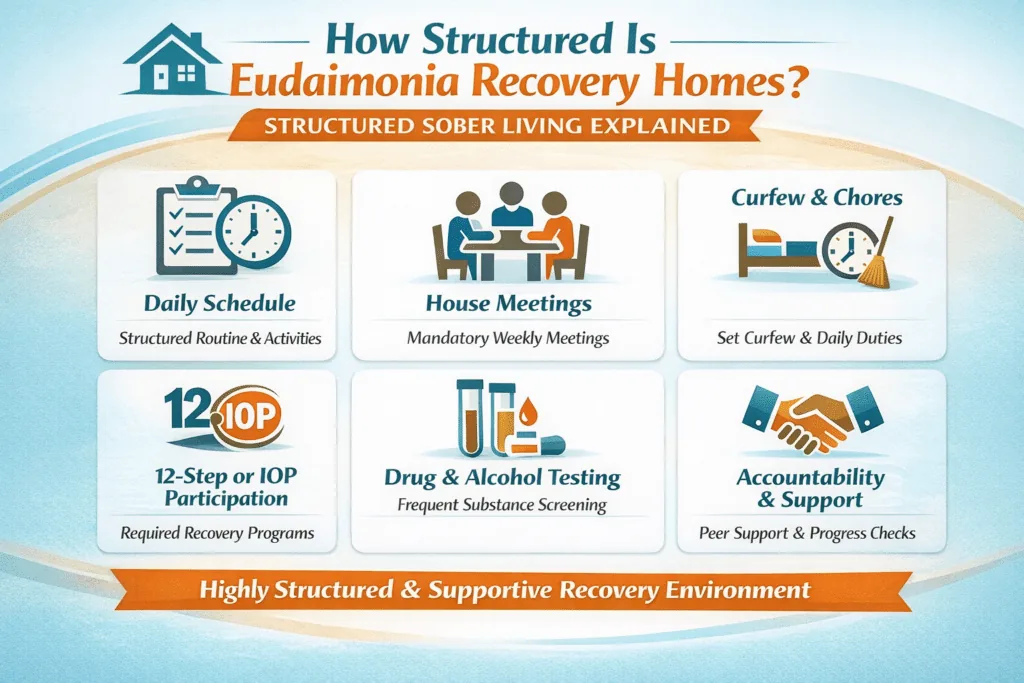



If you’re looking at sober living, “structured” can mean a lot of things. At Eudaimonia Recovery Homes, structure means clear expectations, weekly accountability, and real follow-throughSo the home stays safe, stable, and focused on recovery. The mission is to provide a safe living environment where people in recovery can learn, grow, and build long-term sobriety.
You won’t be left guessing about what’s expected. The home uses house rules, required recovery participation, chores, curfews, and a phase program that helps residents earn more freedom as they show consistency.
Sober Living Structure
What “structured” looks like day to day at ERH
Clear House Rules
ERH house rules include things like no drugs or alcohol, no weapons, required recovery meeting participation, and respectful conduct in the home. Rooms can be inspected without notice, and quiet hours are defined.
Just as important: there’s a discipline process. Some issues follow progressive consequences (like curfew changes), while certain violations can result in immediate dismissal (for example: failed drug/alcohol screen, violence, possession of drugs/alcohol).
Weekly House Meetings
The meeting structure is consistent: opening, introductions, updates, member check-ins, house issues, and a closing.
Chores and Cleanliness Standards
Chores aren’t random. The chore list is designed to help keep the home “tour condition,” break old habits, and teach residents how to maintain a clean living environment.
The chore list is prepared weekly and posted by Sunday evening, running Monday, Sunday (with clear expectations and corrective steps if chores aren’t completed).
Curfew and accountability
Curfew is part of the structure, and it can change by phase. Curfew violations trigger follow-up, and ERH’s disciplinary process includes steps like speaking with the resident and tightening curfew if needed.
Curfew violations come with an alcohol and drug test as part of the response.
Explore the Structure & Accountability at Each of Our Locations
Drug and Alcohol Testing Procedures
When substance use is suspected, Eudaimonia uses defined testing steps (urinalysis protocols and breathalyzer procedures) and documents the results.
If a test comes back positive, the member may need to vacate the property, and staff will assist in coordinating next steps, especially after-hours, and to avoid letting an intoxicated person drive away.
A Phase Program
Eudaimonia’s phase program is not just “time served.” Progress is based on how consistently a person follows rules, works a recovery program, and meets expectations. House managers and staff use judgment when determining progress through phases.
The phase guidelines include expectations such as meeting attendance, employment, chores/rules compliance, curfew adherence, step work with a sponsor, and establishing a home group (with additional expectations for later phases, like sponsoring others).
One-on-one Check-ins
In addition to house meetings, the house managers and staff will perform one-on-one meetings As monthly, 15–20 minute check-ins covering things like step progress, sponsor meetings, home group, spiritual growth, recovery reflections, and feedback.
Resident App tools
Eudaimonia also uses a Resident App with sections like Daily Info, Program, Property, Community, and more.
One example of structure built into the app: weekly check-ins are required, staff review responses, and missed check-ins can lead to lowered curfews (completed check-ins can earn points).
Let’s start building it today, reach out now!
Research More About Sober Living Pricing
Review Our Curfew
Dive deeper into our curfew
Learn more: What is the curfew at Eudaimonia Recovery HomesOur Three Phase Structure
Our Three Phase Structure will help you succeed
What is expected of residents
So everyone can exceed, explore our commitments
What to expect when you move in
The day you arrive, there’s a defined orientation flow. It includes onboarding the resident, a welcome tour with assigned spaces, and a UA before unpacking. The phase program, meetings, and rules are reviewed, and required documents are handled through email.
This matters because it sets the tone right away: expectations are clear from day one, and nobody has to guess what comes next.
Is it “too strict”?
For many people, structure is a relief, especially early on. Eudaimonia’s model is built to protect the household: clear rules, required recovery participation, and a consistent response when standards aren’t met.
That said, details can vary by location (for example, how curfews are applied by phase), so the best move is to ask admissions about the expectations for the specific home you’re considering.
Quick questions to ask admissions (so you know what “structured” means at your home)
What are the curfew times by phase at this location?
How many meetings per week are required, and what qualifies?
How do house meetings run here?
How does phase advancement work in practice?
What’s the approach if someone misses chores/meetings?
When is testing used, and what happens after a positive test?
Next step: call or text admissions
If you want sober living that feels organized (not chaotic) and where expectations are clear, ERH is designed to provide structure: rules, meetings, chores, curfews, phased progress, and documented accountability.
For current openings and the exact structure at the home you’re looking at, contact admissions and ask for the curfew/meeting expectations by phase. (The manual lists Admissions at (855) 687-9354.)