
Published March 23, 2021 · Updated August 5, 2026
On This Page · 10 Sections
Step 3 of the 12-Step Program is all about surrender and spirituality. Although every step can be challenging in its own way, Step 3 may be particularly difficult for some people. So, how do you start working on Step 3 and what does that look like practically in your everyday life?
Below, we’ll provide a detailed look at Step 3 with specific tips on how you can be working this step alongside your sober peers or while completing a sober living program.
What Are the 12 Steps?
- Step 1: We admitted we were powerless over alcohol, that our lives had become unmanageable.
- Step 2: Came to believe that a Power greater than ourselves could restore us to sanity.
- Step 3: Made a decision to turn our will and our lives over to the care of God as we understood Him.
- Step 4: Made a searching and fearless moral inventory of ourselves.
- Step 5: Admitted to God, to ourselves and to another human being the exact nature of our wrongs.
- Step 6: Were entirely ready to have God remove all these defects of character.
- Step 7: Humbly asked Him to remove our shortcomings.
- Step 8: Made a list of all persons we had harmed and became willing to make amends to them all.
- Step 9: Made direct amends to such people wherever possible, except when to do so would injure them or others.
- Step 10: Continued to take personal inventory and when we were wrong promptly admitted it.
- Step 11: Sought through prayer and meditation to improve our conscious contact with God, as we understood Him, praying only for knowledge of His will for us and the power to carry that out.
- Step 12: Having had a spiritual awakening as the result of these steps, we tried to carry this message to alcoholics, and to practice these principles in all our affairs.
What Is Step 3 of the 12-Step Program?
Step 3 of the 12-Step Program is: “We made a decision to turn our will and our lives over to the care of God as we understood Him.”
What Is the Purpose of the Third Step in the 12-Step Program?
The third step of the 12-Step Program is essentially describing the process of surrendering your will to your higher power in order to sustain a life of lasting sobriety.
As if handing over your free will wasn’t hard enough, many people also struggle with the fact that this step refers to God as the higher power.
Although AA is a non-religious program, it uses the word “God” to refer to one’s higher power throughout the text in the Big Book. This can be confusing.
While it may sound like the program requires you to believe in the Christian God, this is very much not true.
Instead, the 12-Step Program only requires that you turn yourself over to a higher power and be open to having a spiritual awakening.
Here, it’s helpful to focus on the “as we understood him” portion of the text. Essentially, this means your higher power is any spiritual being in which you can place your faith.
Ultimately, the purpose of Step 3 is to admit that you can’t control your drug or alcohol use on your own and you are letting go of trying to regain control.
Instead, you’re giving it up to your higher power and trusting that your God or higher power will give you the strength and courage to stay sober.
If you find it difficult or to work the 12-Step program because you are an atheist or because you’re uncomfortable with the text referring to “God” so often, it’s important to acknowledge your feelings and take action.
In short, the 12-Step Program may just not be right for you.
Fortunately, there are many similar types of effective recovery support programs that may be a better fit, including:
- SMART Recovery
- Secular Organizations for Sobriety
- Women for Sobriety
- LifeRing Secular Recovery
If you’re a resident of a Eudaimonia sober living home, our staff members encourage all residents to find a recovery program that suits their individual beliefs and lifestyle.
Although regular recovery group attendance is required for residency at any of our sober living homes and apartments, clients don’t necessarily have to work the 12-Step Program if they feel it’s not right for them.
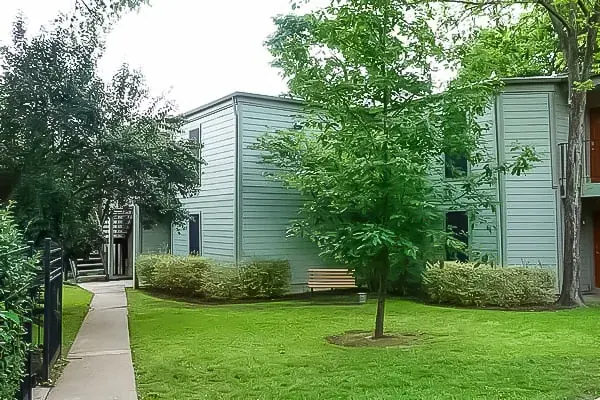
Inside Rustic Creek, our Austin flagship







Common Misconceptions About Step 3
- Surrendering your will to a higher power means you are weak. Conversely, working the 12-Step Program requires an immense amount of courage and strength. 12-Step programs are very much a form of self-care in recovery and they require that you remain diligent and committed, which is no feat for the weak! If you’re currently working through the 12-Step Program, you should be proud of the initiative and dedication you’ve already displayed.
- It’s only for religious people. As mentioned above, the 12-Step Program is intended for people of all religious backgrounds, as well as atheists and agnostics. You don’t have to believe in God to find value in the program’s text and meetings. You can interpret your higher power as you see fit.
- You can just sit back and let your higher power take care of your problems for you. The concept of handing over your will to a higher power does not mean you are incapable of changing your behavior and mindset. It also does not imply that you are released from all personal responsibility. Instead, the 12 Step Program requires that you devote yourself to diligently working each step and regularly attend meetings. Ultimately, these actions will enable you to take the power back and regain control over your life instead of allowing drugs and alcohol to completely rule your life.
How to Work Step 3: 4 Tips
1. Be open to receiving help.
It’s difficult to give up control. With Step 3, you must be open to listening and receiving guidance. Otherwise, you’ll likely continue trying to control your life and your addiction the way you always have.
2. Recognize that working Step 3 is a process, not an immediate solution.
One of the key phrases in this step to keep in mind is, “made a decision.” Much like committing to any other major life change, Step 3 is just the beginning step of submitting your life to your higher power. It won’t be an immediate thing and it will take time, commitment, and continued effort from you. Saying the words alone won’t transform your life, but continuing the work with Steps 4 through 12 will.
3. Determine what is within your control and what is not.
You might be accustomed to trying to control everything in your life. However, there are likely many difficult or painful things in your life that are completely beyond your control too. Acknowledging these things and learning how to let go of them may help you sustain your sobriety by reducing your desire to use drugs or drink.
4. Work with a counselor or therapist to learn how to cope with negative feelings.
Feelings and emotions are powerful motivators that may keep you tied to your drinking habits and the need to control everything in your life. By working with a professional therapist or counselor, you can learn various techniques that will help you identify your feelings and healthily manage them. This will also help you maintain a positive attitude and release control over your life to your higher power.
Get Help to Work Step 3
Step 3 of the 12-Step Program is challenging to work, but with the help of your sponsor, sober peers, and addiction treatment professionals, you can succeed and make transformative life changes. If you need help staying sober, Eudaimonia Recovery Homes can help by providing safe, sober housing as well as peer and professional support working through the 12-Step Program. Call Eudaimonia Recovery Homes at (713) 818-2361 to learn more about our sober living homes, IOP, and recovery support services for men, women, and LGBTQ individuals.