
Published March 11, 2026 · Updated September 25, 2026
On This Page · 6 Sections
If you and your partner are both getting sober and you are searching for somewhere you can live together, you deserve the real answer before you spend another evening comparing websites.
Most sober living is gender-separated, and ours is. Our houses are men's houses or women's houses. We do not run a couples unit, and neither do the great majority of recovery residences in Texas or anywhere else. Any page that implies otherwise, including, until today, one of ours, is setting you up for a difficult phone call.
That is not the end of the conversation, though. Couples in early recovery do find workable arrangements every week. They just rarely look like the one people picture when they start searching.
Why is couples sober living so rare?
Two reasons, and neither is about disapproving of your relationship.
The house is the program. A sober living home works because a group of people hold one another to the same standard. A couple inside that group is a unit with its own loyalties, its own arguments and its own private information. When a couple is struggling, the whole household feels it; when a couple is doing well, they can quietly stop engaging with everyone else. Operators who have tried it mostly stopped.
The living arrangements themselves. Shared rooms, shared bathrooms and gender-separated floors are how most houses are physically laid out. A couples placement is not a policy tweak. It needs different buildings.
This is also why almost every recovery residence has a rule against residents dating each other. Ours is one of the twelve commitments a resident signs, and it covers relationships between community members across all our locations. It is worth reading before you plan around any arrangement.
So what do couples actually do?
The arrangement that works, and that people are often relieved to hear about, is two placements rather than one.
Each partner enters housing appropriate to them, a men's house and a women's house, and they stay in contact under each house's visitation rules while both do the work separately. In cities where an operator runs several houses, those two placements can sometimes be close to one another.
Whether we can place both partners is a question for admissions rather than a promise this page can make, because it depends on what is open, where, and how our community agreement applies to your situation. Ask it directly and early. If the answer is that only one of you can be housed with us, that is worth knowing in week one rather than week six.
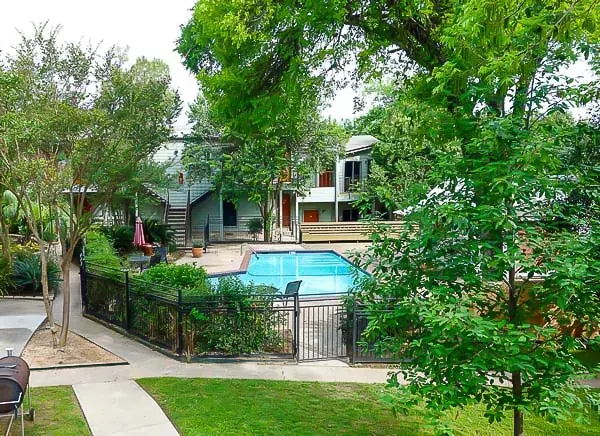
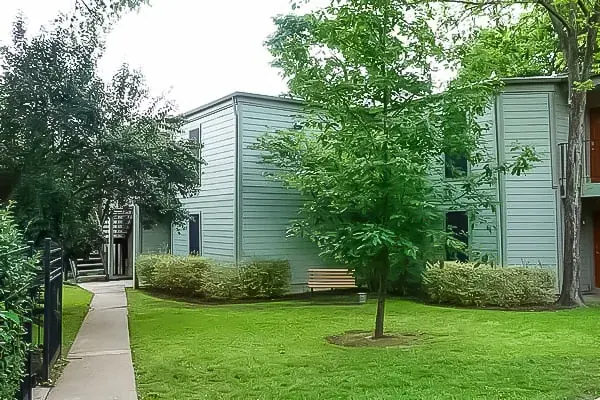
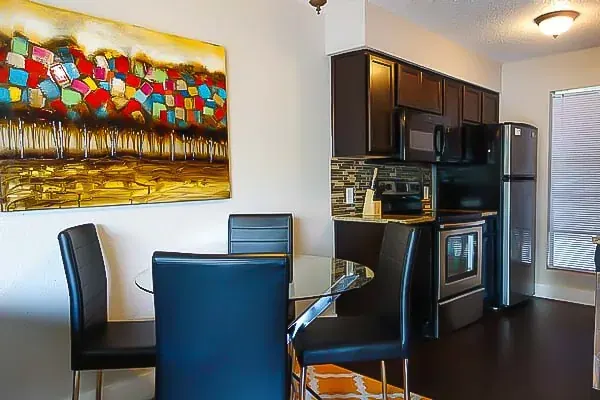
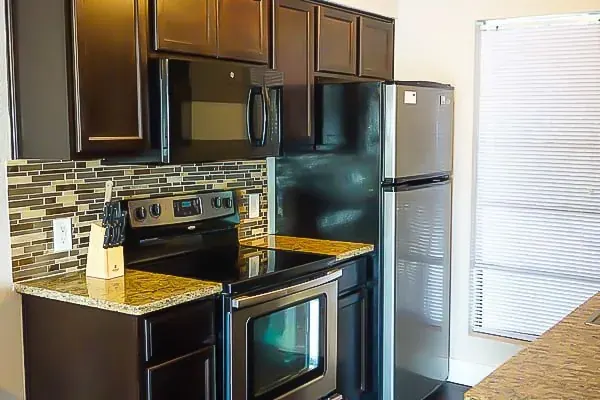
Inside Rustic Creek, our Austin flagship




Is being apart actually bad for the relationship?
Most people assume yes, and it is the fear driving the whole search. It is worth sitting with the alternative honestly.
Two people in early recovery living together are each other's biggest support and each other's biggest risk. If one of you has a hard week, the other is in the room for it. If one of you uses, the other is the first person affected and often the last to tell anyone. Separate housing removes that single point of failure: you each get your own sober household, your own accountability, and your own people to call.
Plenty of couples come through this stronger, and say afterwards that having their own footing first was the thing that made the relationship survivable. That is not a promise about your relationship; it is the pattern people describe.
What if an operator says they do house couples?
Some genuinely do, and there is nothing wrong with looking at them. Ask a few specific things before you commit:
- Is there a separate couples unit, or would you share a house with everyone else?
- What happens to the other partner's placement if one of you relapses or leaves?
- Is each of you assessed and admitted independently, or as a package?
- What is the policy if the relationship ends while you are both living there?
That fourth question is the one that catches people. Ask it while you are still calm and still choosing.
What to ask us
Say on the first call that you are part of a couple and that you are both looking. It changes what admissions can usefully tell you, and there is no advantage to raising it later.
The questions worth asking: what is open in the city you want, for each of you; what our community agreement means for your situation; what visitation actually allows; and what each placement costs, separately.
Start from the city you want, our location pages each carry their own number and current availability, and we run men's and women's houses. Or apply online and say in the form that there are two of you.
If you are also weighing treatment alongside housing, outpatient and sober living together is a common pairing and can be arranged for both of you in the same city.